

Moving the Goalposts Task
Rehearsal footage from Second Guessing, a Hip Hop Theatre work that investigates the theme of coercive control. This trailer highlights the effects that the abuser's tactics of moving the goalposts have on the victim. Video by sara_tamburro_videoeditor

During my two weeks of rehearsal at Centro la Fenice in Modena, Italy, I worked on two movement tasks, Intimidation and Moving the Goalposts. You can read about my thoughts behind the intimidation task here: https://www.emmaready.one/secondguessingblog/intimidation
“Fear and confusion are central to our understanding of coercive control; it is living in a world of moving goal-posts, shifting sand; it is like constantly walking on eggshells. It is a world of everyday terror.”
https://www.cedarnetwork.org.uk/about/what-cedar-achieves/what-is-coercive-control/
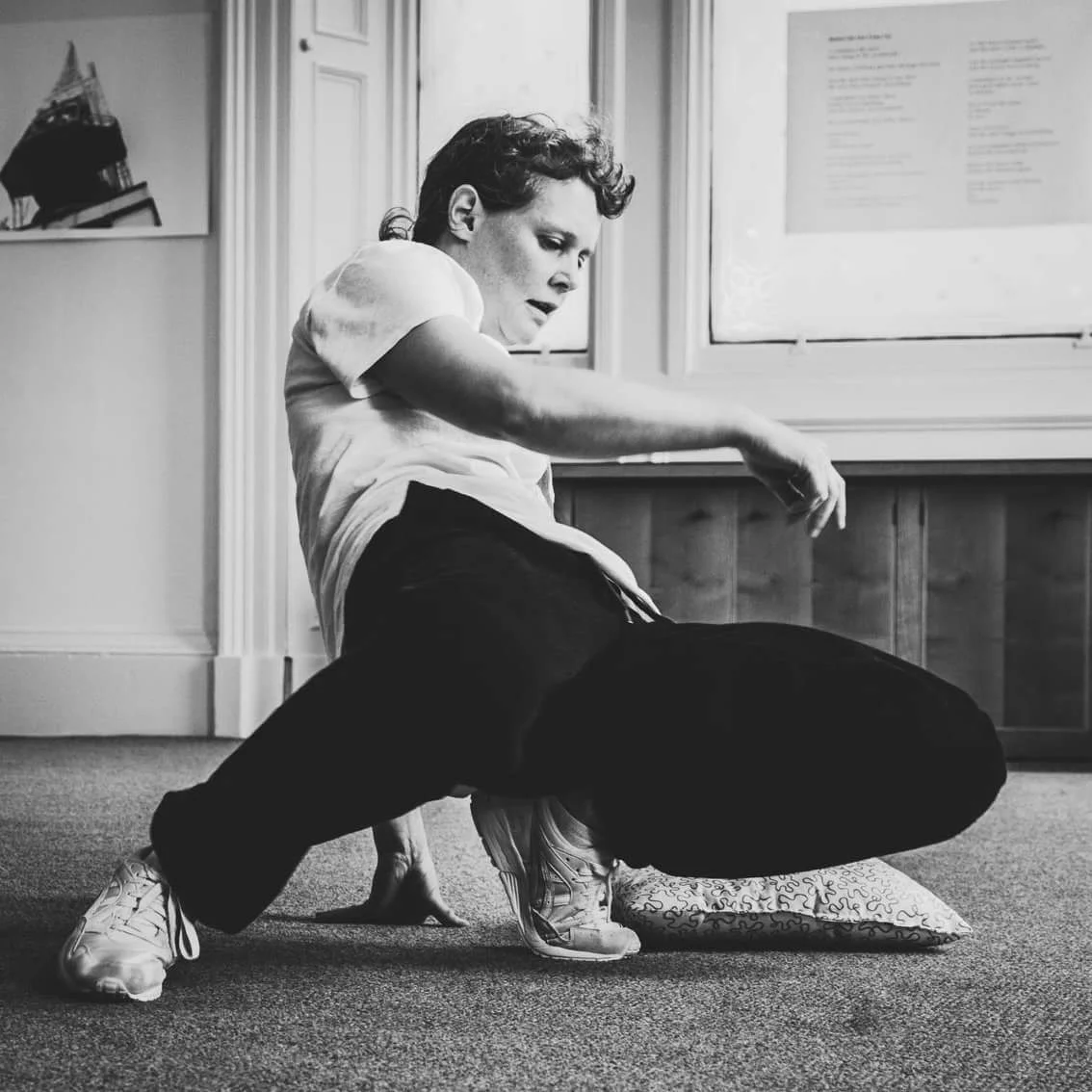
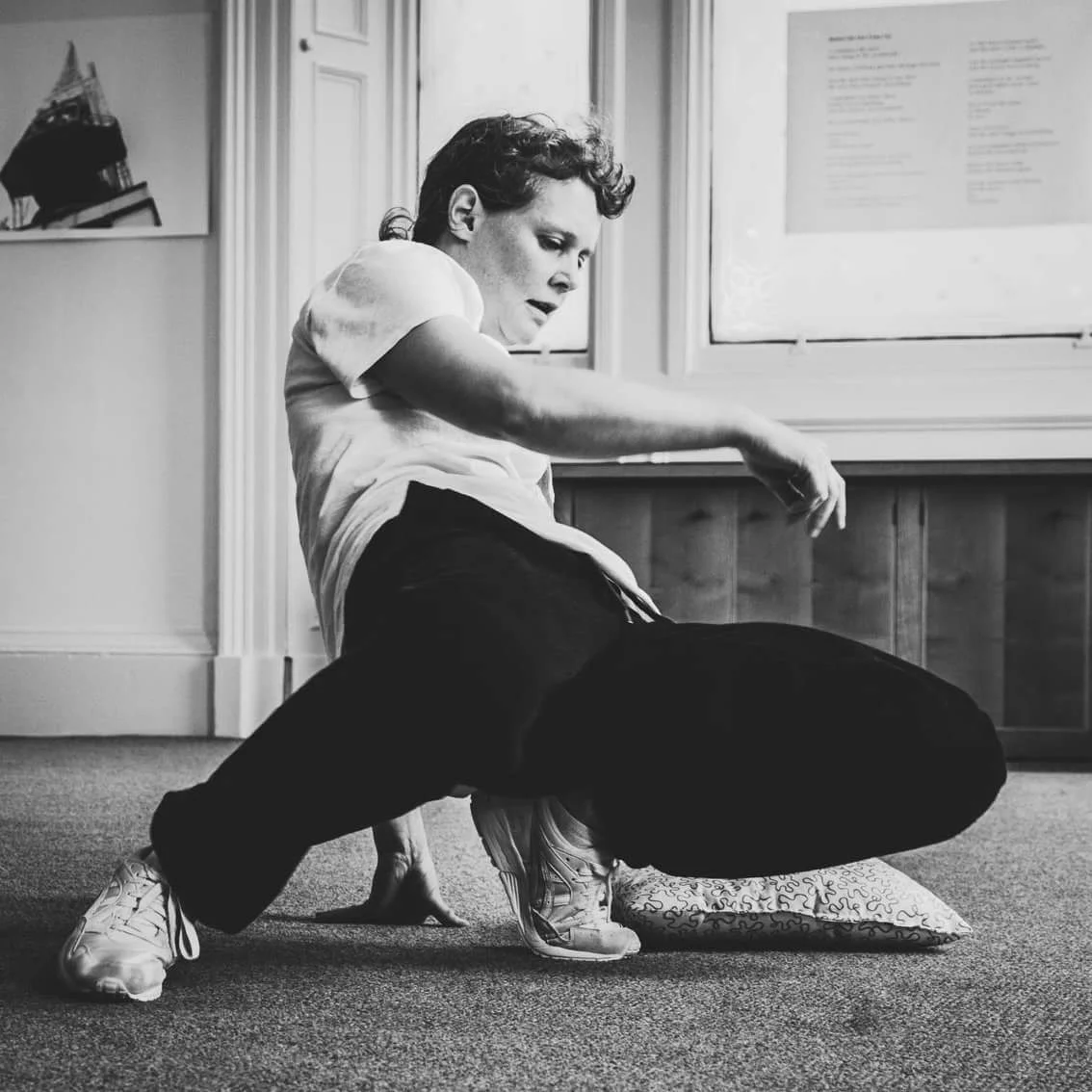
For the Moving the Goalposts task, I extended the work I had begun in June 2018 when I took part in a one day residency as part of Leith Festival at Custom House, Leith. One way the abuser moves the goalposts is by imposing and enforcing a set of rules that are particular to the victim. Once the victim feels they know the rules, the abuser will change them without warning. Changing the rules, or moving the goalposts, is a tactic used by the abuser to keep the victim on edge, hypervigilant and walking on eggshells. I explored these tactics in a physical manner, using cushions as ‘goalposts’. I started by travelling with a pattern of movement towards one cushion, then to the other. I would end up kicking a cushion so it moved to another part of the space, and I would have to change direction in order to reach it the next time. This meant that the movement also had to stretch or shrink, and as I randomly kicked the cushion, I never knew where I would have to go next. This led to me becoming tired and disoriented, mirroring the emotional effects moving the goalposts has on victims.
In Italy, I replicated this task without using cushions as props. I devised a new pattern of movement and tried to take it into different areas of the space. It was more difficult to imagine where the cushions would be, which I thought would add to the feel of confusion as I danced. When I performed this task with the cushions, the movement naturally changed as I chased the ‘goalposts’, without the cushions I had to imagine how the movement would change. I found this more difficult and struggled to create something that made sense. I think I was also too focused on the details of the movement which precluded me from exploring and expressing the emotions of the task. I decided to rethink this task and do some more research before beginning the next block of rehearsals.
Persevere Exhibition and Residency at Custom House 2018
This residency was the first opportunity I had to practically explore the theoretical ideas I have been developing for my next piece of work, a solo Hip Hop dance theatre performance dealing with the theme of coercive control. Using the research I have been doing into coercive control, I have devised practical tasks based around this theme in order to develop movement phrases.
Photography by Deborah Mullen
This residency was the first opportunity I had to practically explore the theoretical ideas I have been developing for my next piece of work, a solo Hip Hop dance theatre performance dealing with the theme of coercive control. Using the research I have been doing into coercive control, I have devised practical tasks based around this theme in order to develop movement phrases. This paired well with the theme of the residency, “Persevere”, as statistics show that women will leave an abusive relationship an average of 7 times before leaving for good, and that this stage of leaving is the most dangerous point in the relationship. Coercive control is a pattern of behaviour which seeks to take away the victim’s freedom and sense of self through demands, threats and surveillance. Tactics used by perpetrators include:
Moving the goalposts
Changing the rules
Gaslighting
Limiting space for action
Gaslighting is defined as intentional twisting of perception of reality, making the victim question and doubt their sanity. Perpetrators of coercive control have their own set of rules that are unknown to the victim, which they enforce and change without warning. Once the victim feels they know the rules, the perpetrator will change them, without notice. Moving the goalposts is a way of keeping the victim confused and walking on eggshells. Limiting space for action is another tactic which aims to make the victim’s world smaller, by limiting freedom to say and do things and to meet their own needs without worry or fear. I explored these tactics in a physical manner, using cushions that were in the space as ‘goalposts’. I devised a pattern of movement, and repeated this with the ‘goalposts’ getting in the way, my space for action was limited. I played with this movement until I felt like it came to a natural end, then I devised another pattern of movement that was more complicated and physically more difficult. Although it seemed like I was starting from the beginning with the second pattern, with the cushions being in almost the same position, I was actually restarting from a place of disadvantage: I was already tired, disoriented and what I had to do now was much more difficult.
As I proceeded, the movement changed, as well as the pattern. No matter how hard I tried to keep to the pattern, I could not, and I could not predict when it would have to change. I was following the cushions, second guessing where they would land and always watching what I was doing. In this way, my movement complied with the location of the cushions.
Having the space and the time to explore these tasks was invaluable to the development of my piece. As a result of this residency I have many more ideas on how to proceed.